





Back to the spectrum

    France's Presidential Elections / Past candidates
    Not running in 2027

    This page is a reference for readers who meet Benoît Hamon in the story of earlier elections. It is not a 2027 candidate profile.

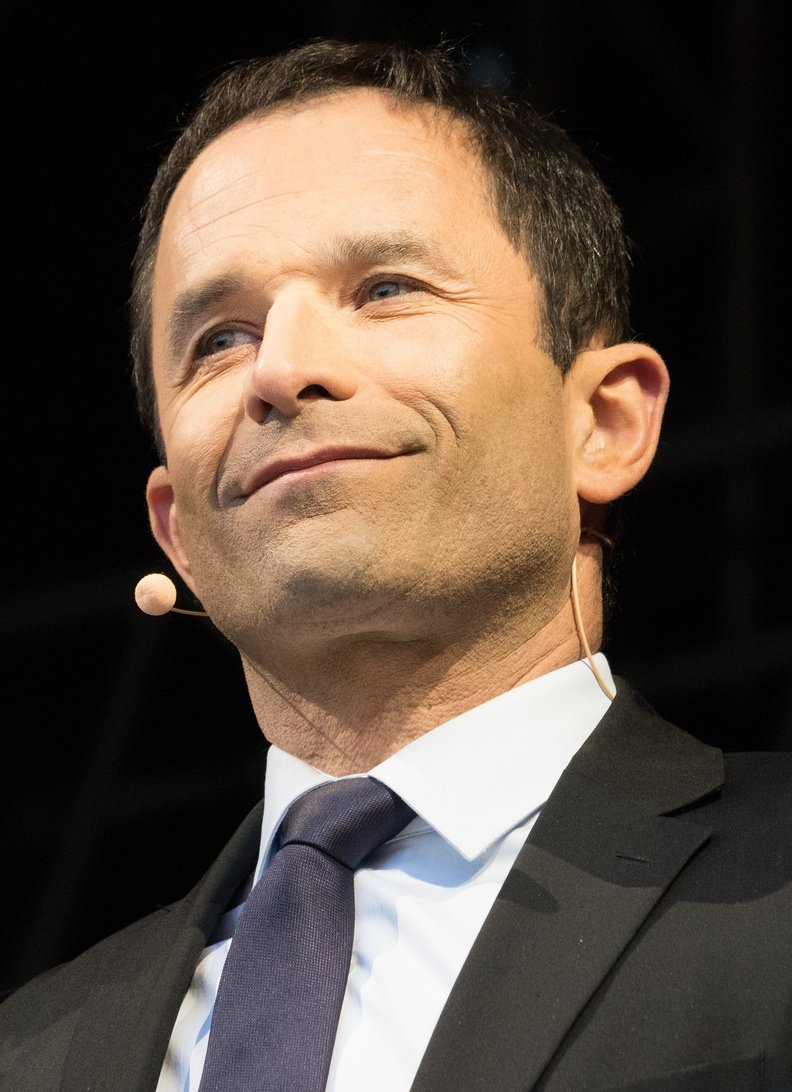
    Portrait of Benoît Hamon

    Benoît Hamon

    Former Education Minister
    Parti socialiste logo

    Parti socialiste

    He is not among the declared or potential contenders tracked for 2027. After 2017 he left the Socialist Party and founded his own movement, Génération.s.

    2017 and 2022

    Benoît Hamon in 2017 and 2022

    2017

    6.36%first round

    Ran as Parti socialiste

    Share of votes cast. Source: Constitutional Council 2017, 2022. The tick marks 5%.

    Background

    Who Benoît is

    Benoît Hamon won the Socialist primary in January 2017 and carried the party in that year's presidential election. He took 6.36% in the first round, the Socialist Party's lowest first-round score up to that point.

    He left the party shortly afterwards and founded Génération.s, a separate left-wing movement.

    The 2027 link

    The Socialist Party's contender tracked on this site for 2027 is Karim Bouamrane.

    Read the Karim Bouamrane profile

    Same family, different names

    SFIO to the Parti socialiste

    A re-founding of the old socialist party after decades of decline. Renaming is common in French politics: parties often change name, logo and structure while staying the same political family.

    1. 1905 / Section française de l'Internationale ouvrière. The unified French socialist party.
    2. 1969 / Parti socialiste. New name taken in 1969 and rebuilt around François Mitterrand in 1971. Hamon (2017) and Hidalgo (2022) ran under it.

    Explore the interactive guide to French party rebranding

    Sources: Constitutional Council, 2017 results; 2022 results. Page prepared from public records and updated as the 2027 field is confirmed.

    Image credits & sources

    Photo: Benoît Hamon place de République plan serré (cropped).jpg. Marion Germa. Via Wikimedia Commons. CC BY-SA 4.0. Original source. Downscaled copy of the Commons file.

    Teaching and learning

    Intended audience: Undergraduate students in French studies, history, political science and related fields; independent adult learners.

    Suggested uses: Guided reading, seminar discussion, comparative political analysis and media-literacy activities.

    After using this resource, learners should be able to:

    • Explain the electoral and institutional context of the election examined.
    • Compare candidates or political positions using the sources available in this resource.
    • Distinguish official results, polling scenarios and critical interpretation.

    Use the objectives that correspond to the material available on this page. Collection pages provide entry points to individual resources; unfinished or unavailable material is not a completed learning activity.

    Original materials © Dr. Amine Zidouh / French Politics, licensed under CC BY-NC 4.0 unless otherwise indicated. When sharing or reproducing covered material, credit Dr. Amine Zidouh and French Politics, link to the source and license, and identify changes. Images, protest signs, artworks and other third-party materials are excluded. See Rights, Credits & Educational Reuse for scope, attribution and the as-is disclaimer.