
Videos / Marine Le Pen
Marine Le Pen’s 2027 campaign: the Orléans rally
Watch Marine Le Pen’s Orléans rally and first Quartier Général episode, uploaded October 27, 2026. French replay with English context and a link to her 2027 profile.
The recording is the first Quartier Général episode covering Marine Le Pen’s Orléans rally. It includes presenter segments and other contributions around the event, not just one uninterrupted Marine Le Pen speech. October 27 is the upload’s publication date; it is not presented here as a verified date for every segment filmed.
Speech highlights / Two speakers, two chronological readings
Bardella and Le Pen: the key moments at Orléans
Why does Jordan Bardella speak first?
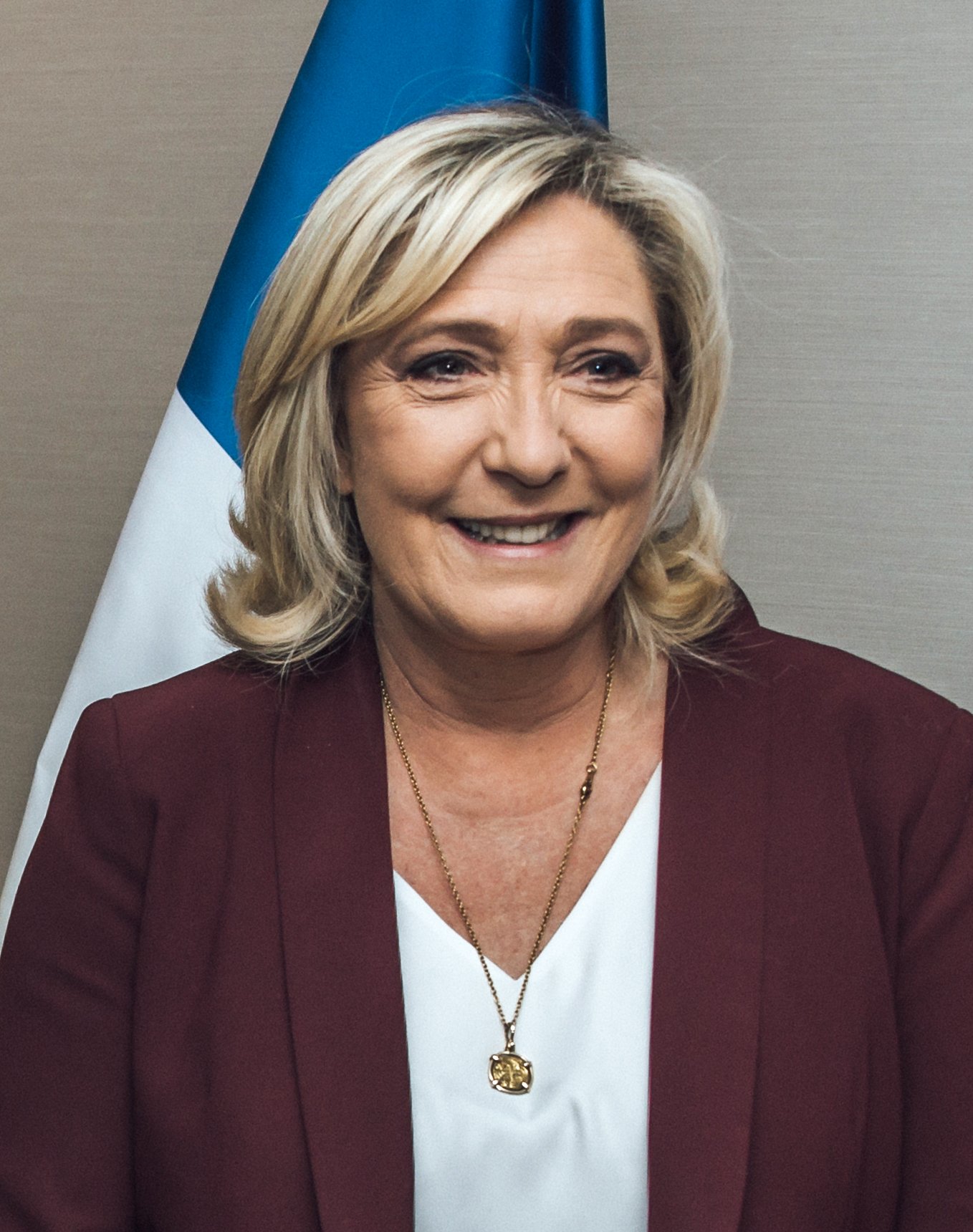
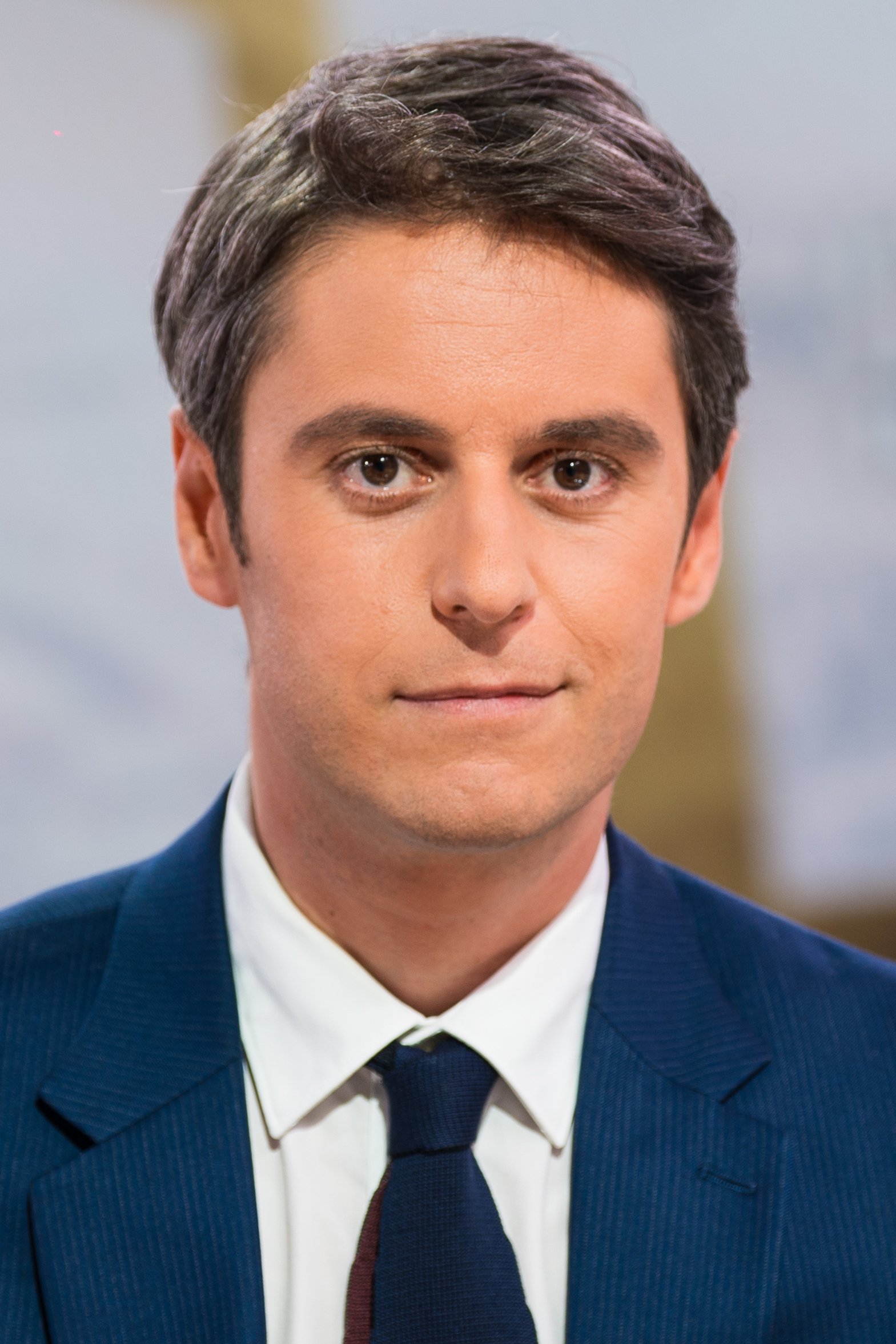
At the October 25, 2026 rally, Bardella speaks as president of the Rassemblement national and as the prime minister Le Pen proposes to appoint if she wins the presidency. His opening address emphasizes immediate political disputes, security and education. Le Pen then develops her presidential vision under the theme of renaissance. These are complementary campaign roles, not two presidential candidacies or an already formed government.
Context sources: France 24 / AFP and Les Échos. October 25 is the rally date reported by these sources; October 27 is the publication date of the longer replay above.
Timing and quotation note: the supplied transcript, lepen1.txt, comes from AFP’s 1h35m recording, not the 3h01m Quartier Général replay embedded above. All timestamp links use AFP’s clock. French quotations are selected transcript excerpts with punctuation, capitalization and obvious spelling errors normalized; uncertain or garbled passages are paraphrased or omitted, not completed as invented quotations. English summaries describe the speakers’ arguments and do not independently verify their statistics, allegations or legal claims.
Jordan Bardella: the opening address
00:16–29:57 in the supplied recording. Every quotation in this subsection is attributed to Bardella.
Party growth and the alliance with Éric Ciotti
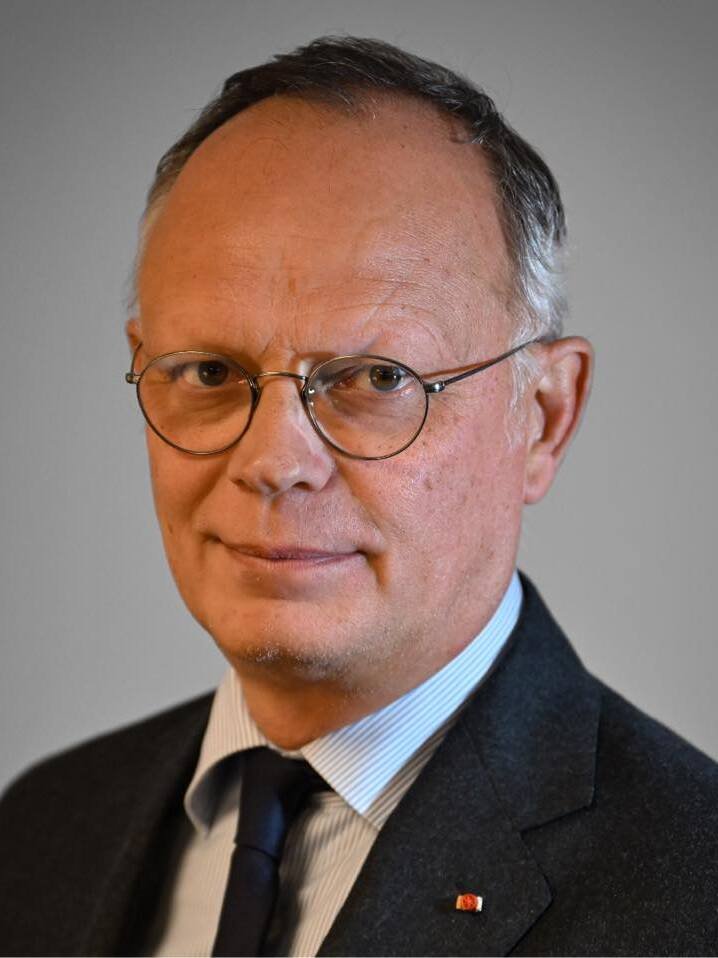
Jordan Bardella · 00:33–02:25 in the AFP recording ↗Bardella opens by celebrating the movement’s parliamentary and municipal presence, then thanks Éric Ciotti for the alliance with the RN. He presents electoral consolidation as preparation for governing; the institutional claims are his account.
« Jamais nous n’avons compté autant de parlementaires ni autant de municipalités. »
Democracy, protest and the right to hold a rally
Jordan Bardella · 03:07–06:04 in the AFP recording ↗He depicts the election as decisive, accuses opponents of attempted intimidation and thanks the police protecting the event. He argues that disagreement must be expressed through speech, law and elections. The allegations against opponents remain attributed to him.
« C’est d’abord reconnaître la liberté de ceux que vous combattez. »
Violence, support for police and attacks on LFI
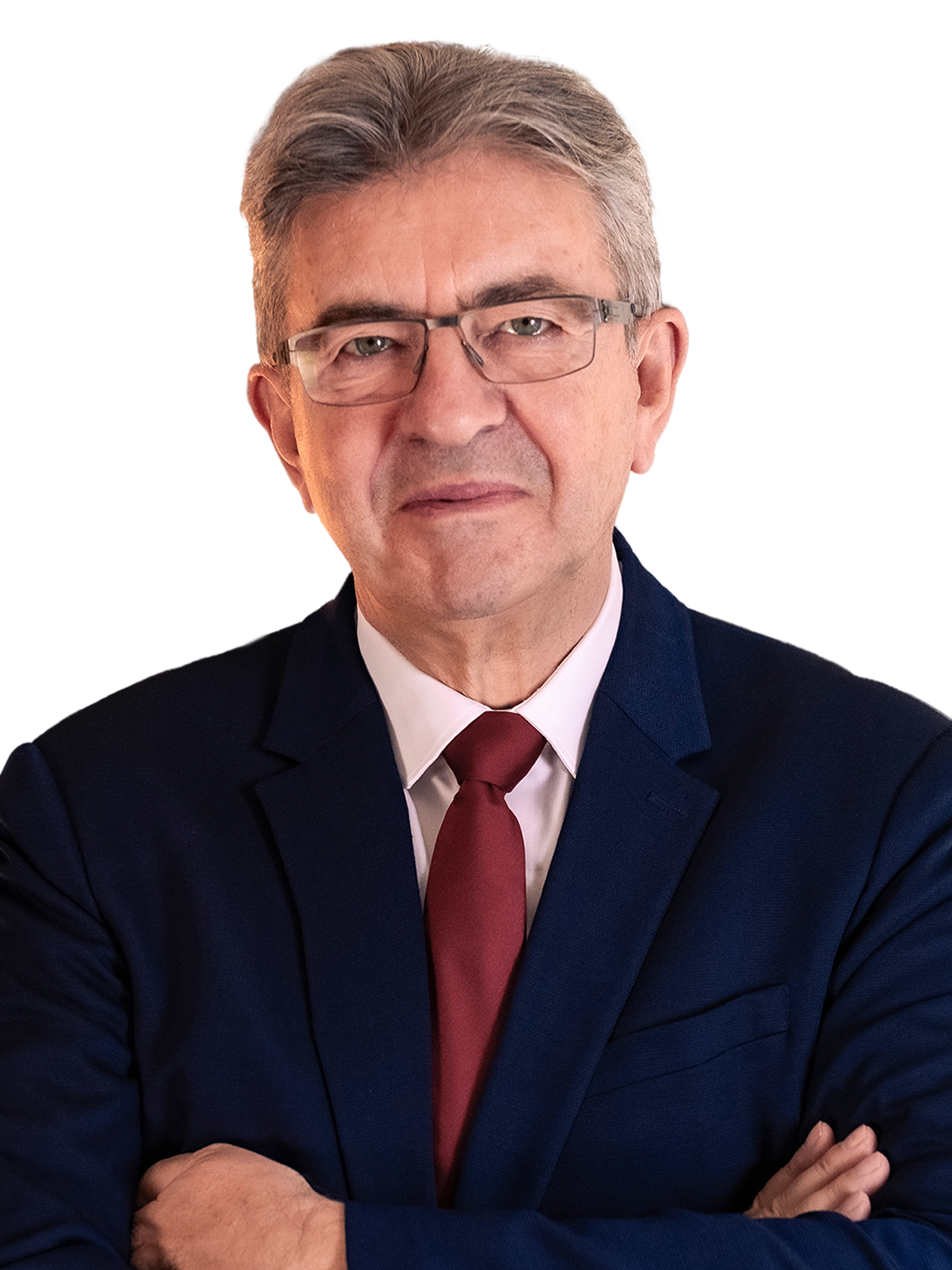
Jordan Bardella · 06:18–14:50 in the AFP recording ↗He invokes a recent shooting and the October 17 disturbances, criticizes the government’s response and attacks Mélenchon and LFI over their rhetoric about police and protest. These are campaign allegations and interpretations, not findings of criminal responsibility. He presents public order as the condition of freedom.
« L’ordre républicain n’est pas négociable. »
Policing and sentencing: the proposed government’s priorities
Jordan Bardella · 15:00–16:17 in the AFP recording ↗Speaking as a prospective head of government, he promises support for police, a presumption of legitimate defense for officers, minimum sentences, criminal majority at sixteen and additional detention capacity. These are proposals, not a description of current law.
« Tu touches à un policier, tu dors en prison. »
Demonstrations, collective liability and the casseur-payeur principle
Jordan Bardella · 16:22–18:37 in the AFP recording ↗He proposes demonstration bans for people deemed dangerous, collective liability for participation in violent gatherings, compensation for damage and suspension of family benefits for families of repeat juvenile offenders. He also seeks EU terrorist designation for ultraleft militias. This section reports his proposals without asserting their legality or feasibility.
« Que ceux qui veulent détruire sachent qu’ils devront réparer. »
Borders and the expulsion of foreign offenders
Jordan Bardella · 18:39–19:06 in the AFP recording ↗He links control of migration to his public-order agenda and proposes systematic expulsion of foreign offenders. The speech’s migration totals and causal claims are not independently verified here.
« Nous reprendrons donc aussi le contrôle de nos frontières et de notre politique migratoire. »
Education: teachers, discipline, screens and admissions
Jordan Bardella · 19:19–23:47 in the AFP recording ↗He turns to education: higher teacher pay, restored authority, compulsory formal address, uniforms, removal of disruptive pupils and enforcement of phone restrictions. He then advocates foundational learning, apprenticeships, reform of Parcoursup and reversal of Macron’s lycée reform. Reforming Parcoursup is distinct from proposing its abolition.
« Nous défendrons l’apprentissage et nous revaloriserons les filières manuelles. »
Youth, transmission and national belonging
Jordan Bardella · 23:56–26:37 in the AFP recording ↗He connects school to transmitting French language, history and culture, then addresses young people as inheritors of a European civilization. His appeal emphasizes patriotism, work, effort and merit, in contrast to the political opponents he criticizes.
« La France de demain a besoin de vous, a besoin de votre énergie. »
Orléans, Jeanne d’Arc and the appeal to accompany Le Pen
Jordan Bardella · 26:47–29:57 in the AFP recording ↗He closes by invoking Jeanne d’Arc and national recovery, asking supporters to accompany Marine Le Pen’s campaign. This is Bardella’s conclusion, not Le Pen’s.
« Vous aurez le choix entre le sursaut et la résignation. »
Marine Le Pen: the presidential address
32:54–1:30:20 in the supplied recording. Every quotation in this subsection is attributed to Le Pen, even where she repeats a policy Bardella introduced earlier.
Orléans and the refusal of inevitable defeat
Marine Le Pen · 32:54–40:59 in the AFP recording ↗Le Pen opens her own address by invoking the city’s history and Jeanne d’Arc. She moves from a diagnosis of decline to the possibility of democratic alternation, blaming political leadership rather than the French people and urging supporters to carry a message of recovery.
« Aucune défaite n’est définitive tant qu’un peuple refuse de s’y résigner. »
Renaissance: a future built from history, not a return to the past
Marine Le Pen · 41:19–45:02 in the AFP recording ↗She compares the present to the period before the Renaissance and social networks to printing. Her central campaign metaphor combines historical inheritance with an optimistic promise of renewal. Renaissance here names her political theme, not Macron’s party.
« C’était bien avant, ce sera mieux demain. »
Knowledge, education, culture and the promise of humanism
Marine Le Pen · 45:04–49:28 in the AFP recording ↗She rejects what she calls new obscurantisms, including Islamist ideology, political violence and hostility to technology. She advocates science, debate, schooling, reading, merit and artistic creation, arguing that politics cannot be reduced to budgets and indicators. These categories and judgments are hers.
« La renaissance sera d’abord celle de l’école. »
Belonging and the transmission of culture and property
Marine Le Pen · 49:31–51:17 in the AFP recording ↗She describes people through attachments to family, place, language and culture, contrasting that vision with the rootlessness she associates with globalization. She connects cultural inheritance to the ability to pass property to children.
« Il est par nature un être de transmission. »
Referendums and proportional representation
Marine Le Pen · 51:30–53:52 in the AFP recording ↗She promises greater use of referendums, invokes the 2005 European referendum and proposes proportional representation with a majority bonus. Her interpretation of constitutional powers and earlier events is a campaign argument, not legal guidance.
« Si nous voulons le pouvoir, mes amis, ça n’est pas pour nous mais pour le rendre au peuple. »
Beauty as a political question
Marine Le Pen · 53:54–57:32 in the AFP recording ↗She moves from political conduct to architecture, public space, art and everyday surroundings. Beauty becomes part of her argument about dignity and the relationship between public authorities and citizens, rather than an exclusively private luxury.
« Oui, le beau est un droit. »
Civility, shared space and everyday rules
Marine Le Pen · 57:36–1:01:11 in the AFP recording ↗She links courtesy and respect for common space to social harmony, then connects incivility to violence. Her examples include noise, harassment, queues and care for vulnerable people. She proposes education and example, but also sanctions.
« L’espace public n’appartient à personne en particulier parce qu’il appartient à tous. »
Limits, borders and zero tolerance
Marine Le Pen · 1:01:21–1:03:27 in the AFP recording ↗She extends the concept of limits from personal behavior to power and national borders, proposing both French and European border protection and strict law enforcement. She says limits should also bind those who govern.
« Nous appliquerons la tolérance zéro. »
Production, AI, enterprise, families and maritime resources
Marine Le Pen · 1:03:32–1:08:21 in the AFP recording ↗She defines national power as protection rather than domination. Her economic proposals include budget restraint, a fiscal rule, productive investment, robotics and AI, support for young people and families, lower production taxes and fewer regulations. She also proposes reversing the Hulot law on hydrocarbons and developing maritime and overseas resources. This is her growth agenda, not an independently costed assessment.
« Nous ne voulons pas d’une puissance de domination, mais de protection. »
Purchasing power and protection across society
Marine Le Pen · 1:08:23–1:10:12 in the AFP recording ↗She applies that protective language to children, child welfare, energy taxation, schools, health, older people and neglected territories. She advocates rebalancing resources away from Paris and regional capitals, alongside her restrictive migration agenda.
« La protection des Français, voilà les quatre mots qui résument notre grand dessein pour la France. »
Security, criminal justice and the rule of law
Marine Le Pen · 1:10:14–1:13:23 in the AFP recording ↗She promises effective prosecution and punishment, compensation by perpetrators, action against cartels and expulsion of foreign offenders. She attacks supranational courts and a magistrates’ union while invoking the rule of law. Those criticisms and claims of institutional failure are attributed to her, not adopted as this page’s legal conclusions.
« La certitude des poursuites, la certitude de la peine, la certitude de leur exécution. »
National defense, nuclear sovereignty and peace
Marine Le Pen · 1:13:34–1:16:33 in the AFP recording ↗She advocates a national army and exclusive French control of nuclear weapons while rejecting military adventurism. She frames independence, equidistance and constancy as the principles of her proposed foreign policy.
« Nous ferons de la France une nation de paix. »
A protective state, national unity and the value of work
Marine Le Pen · 1:16:42–1:21:58 in the AFP recording ↗She describes a modern, protective, strategic and impartial state, rejects what she calls communautarisme and proposes a constitutional national-community principle. She also promises social protection, fair remuneration and wider employee profit-sharing while rejecting a left-right framing.
« Je ne suis ni l’aile droite ni l’aile gauche. Je suis l’oiseau. »
Presidential restraint, the Fifth Republic and national priority
Marine Le Pen · 1:22:19–1:26:15 in the AFP recording ↗She presents the presidency as guardian of sovereignty and a unifying office, announces her intention to leave the parliamentary group presidency, and argues for restoring rather than replacing the Fifth Republic. She proposes constitutional primacy and national priority. These are her institutional positions; the page does not certify their compatibility with existing obligations.
« La Ve République, elle n’a pas besoin d’être remplacée. Elle a besoin d’être restaurée. »
Bardella as prime minister and a government of national union
Marine Le Pen · 1:26:27–1:28:58 in the AFP recording ↗She allocates distinct roles to the president, government, Parliament and courts, names Bardella as her proposed prime minister, and promises an open, pluralist government of national union. This confirms the intended presidential–prime-ministerial pairing announced at the beginning of this guide; it is conditional on electoral victory, not an appointment already made.
« Le Premier ministre, et le mien sera Jordan Bardella, sera le chef de l’orchestre gouvernemental. »
The conclusion: hope and a future to construct
Marine Le Pen · 1:29:06–1:30:20 in the AFP recording ↗She ends by returning to optimism and renewal, describing crisis as the setting from which a new political beginning can emerge. The closing appeal below is hers, separate from Bardella’s earlier conclusion.
« Mes amis, ne craignez pas d’espérer. N’ayez pas peur de vouloir. »
« Le futur n’est pas une menace. Le futur est une promesse. »About the rally video
Is this her complete 2027 program?
This is a rally and campaign broadcast. It can be used to examine statements and campaign framing, but it is not presented as a complete, finalized manifesto or independent fact-check. Consult the profile’s dated policy sources and official-material links.
What does “meeting” mean in French politics?
A meeting is a public political rally. This page is a recording of the Orléans event, not a booking page for a private meeting or meet-and-greet.
Is the video in English?
The broadcast is in French. Caption and translation controls depend on YouTube; verified English subtitles are not asserted. The text on this page provides brief English context.