






Data / Presidential elections
2012
France voted.
2012 French presidential election results
01Round 1
How it works +
A national presidential vote
A candidate needs an absolute majority of valid candidate votes to win in the first round. Otherwise the leading two candidates may contest a runoff two weeks later. This is not a party primary.
Who could run in 2012?
The minimum candidacy age was 18. Candidates had to be French and meet the voting-rights and eligibility requirements then in force. Party membership was not required.
Ballot access required 500 endorsements from authorized elected officials across at least 30 departments or equivalent territories. No more than 50 of the required endorsements could come from one territory. These were not signatures from ordinary voters.
The Constitutional Council checked the candidate list and election results. Disclosure and administrative requirements have changed over time; current forms should not be projected unchanged onto a historical election.
22 April 2012
What do shares of registered voters mean?
The usual share divides a candidate’s votes by valid candidate votes. Registered-voter mode divides that same count by everyone registered, including abstainers and people casting a vote blanc or an invalid ballot.
Example: 30 out of 60 valid votes is 50%. If 100 people were registered, those same 30 votes are 30% of the electorate. The count and legal outcome are unchanged.
Click a candidate row or bar to open context. All bars use a 0–100% scale. Candidate percentages use valid candidate votes.
François HollandeParti socialisteQualified for runoff28.63%10,272,705 votesExplore +
François Hollande
Historical ticket: Parti socialiste.
Names, continuity and current identity
PS succeeded SFIO in 1969. Mitterrand’s 1974 candidacy had broader Union of the Left support. Candidate totals cannot be separated into the votes of each supporting party. The 1965 Mitterrand entry is a CIR-led candidacy backed by SFIO and PCF, not a result for a PS organization that did not yet exist. Party history reference ↗
Party identity: Parti socialiste / SFIO predecessor. The source tables below preserve each historical ticket; a lineage is not a claim that all these organizations were identical.
No active same-person 2027 profile is linked here. This does not imply that the party has no 2027 contender.
Earlier direct presidential elections (up to five)
This table includes up to five earlier direct elections of the Fifth Republic, and fewer when fewer had occurred. 1958’s indirect electoral-college election is documented separately ↗
Newest first, within the Fifth Republic. Shared endorsements are labelled, never treated as separate party votes. “No separate entry” is not a 0% result.
| Year | Candidate / contemporary label | Round 1 | Runoff |
|---|---|---|---|
| 2007 ↗ | Ségolène Royal · Parti socialiste | 25.87% | 46.94% |
| 2002 ↗ | Lionel Jospin · Parti socialiste | 16.18% | Not in runoff |
| 1995 ↗ | Lionel Jospin · Parti socialiste | 23.30% | 47.36% |
| 1988 ↗ | François Mitterrand · Parti socialiste | 34.11% | 54.02% |
| 1981 ↗ | François Mitterrand · Parti socialiste | 25.85% | 51.76% |
Historical first-round and runoff shares use valid candidate votes. Broad predecessors and family comparisons are explicitly named. For PS and UMP/LR, the successive percentages document the change without assigning causes or making editorial judgments.
Nicolas SarkozyUnion pour un mouvement populaireQualified for runoff27.18%9,753,629 votesExplore +
Nicolas Sarkozy
Historical ticket: Union pour un mouvement populaire.
Names, continuity and current identity
UMP was renamed Les Républicains in 2015. UMP was formed in 2002 from RPR and other organizations: earlier RPR and UDR entries are predecessor-lineage comparisons, not an unchanged party. The earlier Gaullist series also includes UNR–UDT in 1965 and UNR support in 1958. These are labelled predecessor organizations, not LR under its present name. Rival RPR members Chirac and Balladur are listed separately in 1995, never added together. Party history reference ↗
Party identity: Les Républicains / UMP / RPR / UDR. The source tables below preserve each historical ticket; a lineage is not a claim that all these organizations were identical.
No active same-person 2027 profile is linked here. This does not imply that the party has no 2027 contender.
Earlier direct presidential elections (up to five)
This table includes up to five earlier direct elections of the Fifth Republic, and fewer when fewer had occurred. 1958’s indirect electoral-college election is documented separately ↗
Newest first, within the Fifth Republic. Shared endorsements are labelled, never treated as separate party votes. “No separate entry” is not a 0% result.
| Year | Candidate / contemporary label | Round 1 | Runoff |
|---|---|---|---|
| 2007 ↗ | Nicolas Sarkozy · Union pour un mouvement populaire | 31.18% | 53.06% |
| 2002 ↗ | Jacques Chirac · Rassemblement pour la République | 19.88% | 82.21% |
| 1995 ↗ | Jacques Chirac · Rassemblement pour la République, Chirac candidacy Édouard Balladur · RPR member, rival candidacy supported by UDF | 20.84% 18.58% | 52.64% Not in runoff |
| 1988 ↗ | Jacques Chirac · Rassemblement pour la République | 19.96% | 45.98% |
| 1981 ↗ | Jacques Chirac · Rassemblement pour la République | 18.00% | Not in runoff |
Historical first-round and runoff shares use valid candidate votes. Broad predecessors and family comparisons are explicitly named. For PS and UMP/LR, the successive percentages document the change without assigning causes or making editorial judgments.
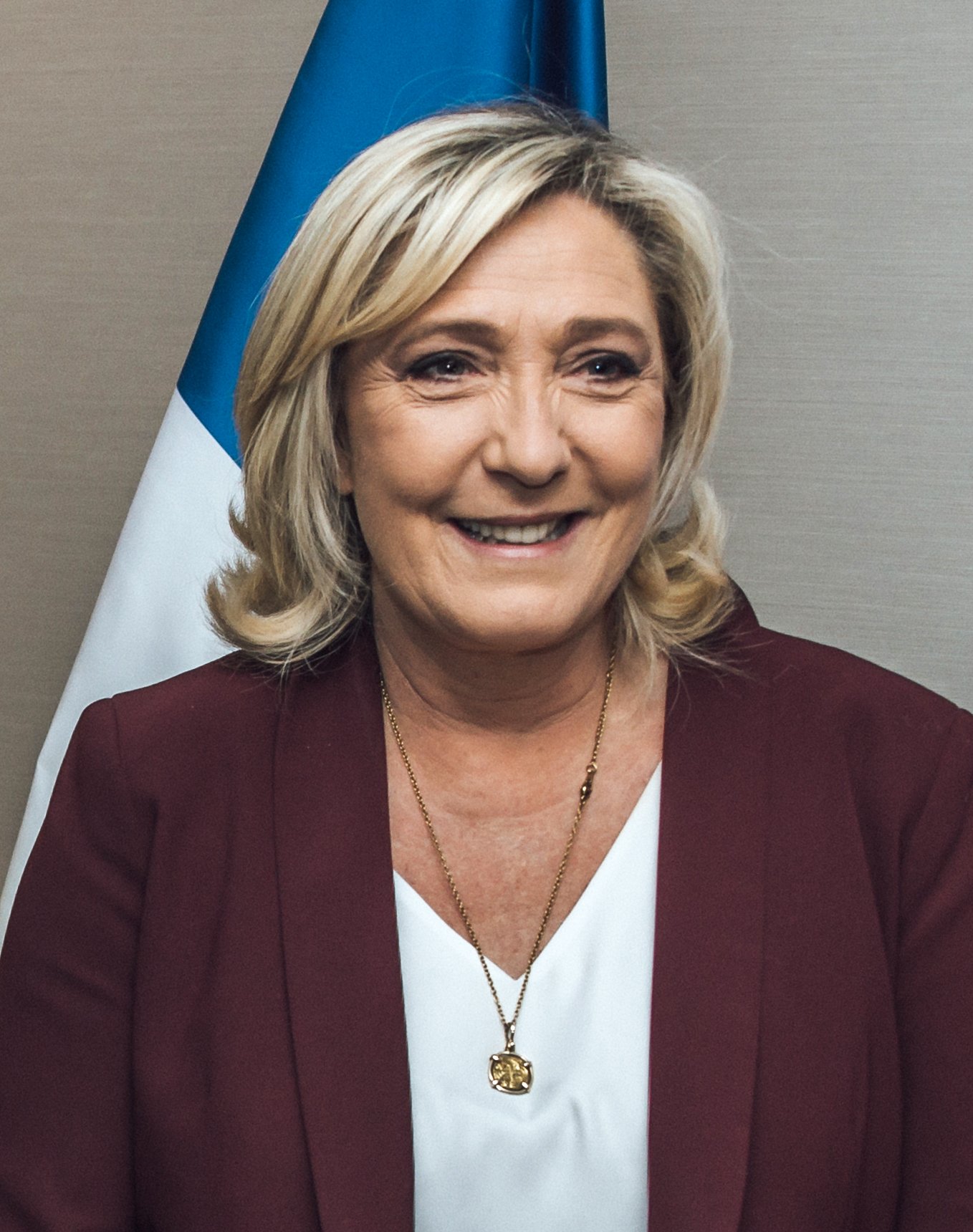
Marine Le PenFront national17.90%6,421,426 votesExplore +
Marine Le Pen
Historical ticket: Front national.
Names, continuity and current identity
Front national was renamed Rassemblement national in 2018. These are the same party across a change of name. Party history reference ↗
Party identity: Rassemblement national (formerly FN). The source tables below preserve each historical ticket; a lineage is not a claim that all these organizations were identical.
Earlier direct presidential elections (up to five)
This table includes up to five earlier direct elections of the Fifth Republic, and fewer when fewer had occurred. 1958’s indirect electoral-college election is documented separately ↗
Newest first, within the Fifth Republic. Shared endorsements are labelled, never treated as separate party votes. “No separate entry” is not a 0% result.
| Year | Candidate / contemporary label | Round 1 | Runoff |
|---|---|---|---|
| 2007 ↗ | Jean-Marie Le Pen · Front national | 10.44% | Not in runoff |
| 2002 ↗ | Jean-Marie Le Pen · Front national | 16.86% | 17.79% |
| 1995 ↗ | Jean-Marie Le Pen · Front national | 15.00% | Not in runoff |
| 1988 ↗ | Jean-Marie Le Pen · Front national | 14.38% | Not in runoff |
| 1981 ↗ | No separate entry in this party/lineage series | — | — |
Historical first-round and runoff shares use valid candidate votes. Broad predecessors and family comparisons are explicitly named. For PS and UMP/LR, the successive percentages document the change without assigning causes or making editorial judgments.
Jean-Luc MélenchonFront de gauche coalition11.10%3,984,822 votesExplore +
Jean-Luc Mélenchon
Historical ticket: Front de gauche coalition.
Names, continuity and current identity
LFI was founded in 2016. Mélenchon’s 2012 Front de gauche candidacy is a coalition predecessor comparison, not a result earned by LFI itself. Party history reference ↗
Party identity: La France insoumise / Front de gauche comparison. The source tables below preserve each historical ticket; a lineage is not a claim that all these organizations were identical.
Earlier direct presidential elections (up to five)
This table includes up to five earlier direct elections of the Fifth Republic, and fewer when fewer had occurred. 1958’s indirect electoral-college election is documented separately ↗
Newest first, within the Fifth Republic. Shared endorsements are labelled, never treated as separate party votes. “No separate entry” is not a 0% result.
| Year | Candidate / contemporary label | Round 1 | Runoff |
|---|---|---|---|
| 2007 ↗ | No separate entry in this party/lineage series | — | — |
| 2002 ↗ | No separate entry in this party/lineage series | — | — |
| 1995 ↗ | No separate entry in this party/lineage series | — | — |
| 1988 ↗ | No separate entry in this party/lineage series | — | — |
| 1981 ↗ | No separate entry in this party/lineage series | — | — |
Historical first-round and runoff shares use valid candidate votes. Broad predecessors and family comparisons are explicitly named. For PS and UMP/LR, the successive percentages document the change without assigning causes or making editorial judgments.
François BayrouMouvement démocrate9.13%3,275,122 votesExplore +
François Bayrou
Historical ticket: Mouvement démocrate.
Names, continuity and current identity
Bayrou ran under UDF in 2002 and 2007 and MoDem in 2012. Giscard’s earlier Independent Republicans and Poher’s Centre démocrate are centrist-family comparisons, not MoDem results. The 1965 Lecanuet entry belongs to MRP. MRP, Centre démocrate, Independent Republicans, UDF and MoDem entries are labelled centrist-family comparisons, not an unchanged single party. Party history reference ↗
Party identity: MoDem / UDF centrist comparison. The source tables below preserve each historical ticket; a lineage is not a claim that all these organizations were identical.
No active same-person 2027 profile is linked here. This does not imply that the party has no 2027 contender.
Earlier direct presidential elections (up to five)
This table includes up to five earlier direct elections of the Fifth Republic, and fewer when fewer had occurred. 1958’s indirect electoral-college election is documented separately ↗
Newest first, within the Fifth Republic. Shared endorsements are labelled, never treated as separate party votes. “No separate entry” is not a 0% result.
| Year | Candidate / contemporary label | Round 1 | Runoff |
|---|---|---|---|
| 2007 ↗ | François Bayrou · Union pour la démocratie française | 18.57% | Not in runoff |
| 2002 ↗ | François Bayrou · Union pour la démocratie française | 6.84% | Not in runoff |
| 1995 ↗ | No separate entry in this party/lineage series | — | — |
| 1988 ↗ | Raymond Barre · Union pour la démocratie française | 16.54% | Not in runoff |
| 1981 ↗ | Valéry Giscard d’Estaing · Union pour la démocratie française | 28.32% | 48.24% |
Historical first-round and runoff shares use valid candidate votes. Broad predecessors and family comparisons are explicitly named. For PS and UMP/LR, the successive percentages document the change without assigning causes or making editorial judgments.
Eva JolyEurope Écologie Les Verts2.31%828,345 votesExplore +
Eva Joly
Historical ticket: Europe Écologie Les Verts.
Names, continuity and current identity
EELV became Les Écologistes in 2023 and incorporated Les Verts in 2010. Earlier independent ecologist candidacies are family comparisons, not results for the same organization. EELV supported Hamon in 2017 without its own candidate. Party history reference ↗
Party identity: Les Écologistes / EELV / Les Verts. The source tables below preserve each historical ticket; a lineage is not a claim that all these organizations were identical.
No active same-person 2027 profile is linked here. This does not imply that the party has no 2027 contender.
Earlier direct presidential elections (up to five)
This table includes up to five earlier direct elections of the Fifth Republic, and fewer when fewer had occurred. 1958’s indirect electoral-college election is documented separately ↗
Newest first, within the Fifth Republic. Shared endorsements are labelled, never treated as separate party votes. “No separate entry” is not a 0% result.
| Year | Candidate / contemporary label | Round 1 | Runoff |
|---|---|---|---|
| 2007 ↗ | Dominique Voynet · Les Verts | 1.57% | Not in runoff |
| 2002 ↗ | Noël Mamère · Les Verts | 5.25% | Not in runoff |
| 1995 ↗ | Dominique Voynet · Les Verts | 3.32% | Not in runoff |
| 1988 ↗ | Antoine Waechter · Les Verts | 3.78% | Not in runoff |
| 1981 ↗ | Brice Lalonde · Independent ecologist candidacy | 3.88% | Not in runoff |
Historical first-round and runoff shares use valid candidate votes. Broad predecessors and family comparisons are explicitly named. For PS and UMP/LR, the successive percentages document the change without assigning causes or making editorial judgments.
Nicolas Dupont-AignanDebout la République1.79%643,907 votesExplore +
Nicolas Dupont-Aignan
Historical ticket: Debout la République.
Names, continuity and current identity
Debout la République was renamed Debout la France in 2014. It is not the same party as UMP/LR. Party history reference ↗
Party identity: Debout la France / Debout la République. The source tables below preserve each historical ticket; a lineage is not a claim that all these organizations were identical.
Earlier direct presidential elections (up to five)
This table includes up to five earlier direct elections of the Fifth Republic, and fewer when fewer had occurred. 1958’s indirect electoral-college election is documented separately ↗
Newest first, within the Fifth Republic. Shared endorsements are labelled, never treated as separate party votes. “No separate entry” is not a 0% result.
| Year | Candidate / contemporary label | Round 1 | Runoff |
|---|---|---|---|
| 2007 ↗ | No separate entry in this party/lineage series | — | — |
| 2002 ↗ | No separate entry in this party/lineage series | — | — |
| 1995 ↗ | No separate entry in this party/lineage series | — | — |
| 1988 ↗ | No separate entry in this party/lineage series | — | — |
| 1981 ↗ | No separate entry in this party/lineage series | — | — |
Historical first-round and runoff shares use valid candidate votes. Broad predecessors and family comparisons are explicitly named. For PS and UMP/LR, the successive percentages document the change without assigning causes or making editorial judgments.
Philippe PoutouNouveau Parti anticapitaliste1.15%411,160 votesExplore +
Philippe Poutou
Historical ticket: Nouveau Parti anticapitaliste.
Names, continuity and current identity
NPA was founded in 2009, following the LCR. Earlier LCR candidacies are labelled predecessors. The later NPA split means these historical totals cannot automatically be credited to a single present-day successor. Party history reference ↗
Party identity: NPA / LCR predecessor. The source tables below preserve each historical ticket; a lineage is not a claim that all these organizations were identical.
No active same-person 2027 profile is linked here. This does not imply that the party has no 2027 contender.
Earlier direct presidential elections (up to five)
This table includes up to five earlier direct elections of the Fifth Republic, and fewer when fewer had occurred. 1958’s indirect electoral-college election is documented separately ↗
Newest first, within the Fifth Republic. Shared endorsements are labelled, never treated as separate party votes. “No separate entry” is not a 0% result.
| Year | Candidate / contemporary label | Round 1 | Runoff |
|---|---|---|---|
| 2007 ↗ | Olivier Besancenot · Ligue communiste révolutionnaire | 4.08% | Not in runoff |
| 2002 ↗ | Olivier Besancenot · Ligue communiste révolutionnaire | 4.25% | Not in runoff |
| 1995 ↗ | No separate entry in this party/lineage series | — | — |
| 1988 ↗ | No separate entry in this party/lineage series | — | — |
| 1981 ↗ | No separate entry in this party/lineage series | — | — |
Historical first-round and runoff shares use valid candidate votes. Broad predecessors and family comparisons are explicitly named. For PS and UMP/LR, the successive percentages document the change without assigning causes or making editorial judgments.
Nathalie ArthaudLutte ouvrière0.56%202,548 votesExplore +
Nathalie Arthaud
Historical ticket: Lutte ouvrière.
Names, continuity and current identity
Arlette Laguiller and Nathalie Arthaud ran for Lutte ouvrière in different elections. Party history reference ↗
Party identity: Lutte ouvrière. The source tables below preserve each historical ticket; a lineage is not a claim that all these organizations were identical.
Earlier direct presidential elections (up to five)
This table includes up to five earlier direct elections of the Fifth Republic, and fewer when fewer had occurred. 1958’s indirect electoral-college election is documented separately ↗
Newest first, within the Fifth Republic. Shared endorsements are labelled, never treated as separate party votes. “No separate entry” is not a 0% result.
| Year | Candidate / contemporary label | Round 1 | Runoff |
|---|---|---|---|
| 2007 ↗ | Arlette Laguiller · Lutte ouvrière | 1.33% | Not in runoff |
| 2002 ↗ | Arlette Laguiller · Lutte ouvrière | 5.72% | Not in runoff |
| 1995 ↗ | Arlette Laguiller · Lutte ouvrière | 5.30% | Not in runoff |
| 1988 ↗ | Arlette Laguiller · Lutte ouvrière | 1.99% | Not in runoff |
| 1981 ↗ | Arlette Laguiller · Lutte ouvrière | 2.30% | Not in runoff |
Historical first-round and runoff shares use valid candidate votes. Broad predecessors and family comparisons are explicitly named. For PS and UMP/LR, the successive percentages document the change without assigning causes or making editorial judgments.
Jacques CheminadeSolidarité et Progrès0.25%89,545 votesExplore +
Jacques Cheminade
Historical ticket: Solidarité et Progrès.
Names, continuity and current identity
Cheminade ran for Fédération pour une nouvelle solidarité in 1995 and Solidarité et Progrès in later contests. This is a labelled organizational lineage. Party history reference ↗
Party identity: Cheminade / Solidarité et Progrès. The source tables below preserve each historical ticket; a lineage is not a claim that all these organizations were identical.
No active same-person 2027 profile is linked here. This does not imply that the party has no 2027 contender.
Earlier direct presidential elections (up to five)
This table includes up to five earlier direct elections of the Fifth Republic, and fewer when fewer had occurred. 1958’s indirect electoral-college election is documented separately ↗
Newest first, within the Fifth Republic. Shared endorsements are labelled, never treated as separate party votes. “No separate entry” is not a 0% result.
| Year | Candidate / contemporary label | Round 1 | Runoff |
|---|---|---|---|
| 2007 ↗ | No separate entry in this party/lineage series | — | — |
| 2002 ↗ | No separate entry in this party/lineage series | — | — |
| 1995 ↗ | Jacques Cheminade · Fédération pour une nouvelle solidarité | 0.28% | Not in runoff |
| 1988 ↗ | No separate entry in this party/lineage series | — | — |
| 1981 ↗ | No separate entry in this party/lineage series | — | — |
Historical first-round and runoff shares use valid candidate votes. Broad predecessors and family comparisons are explicitly named. For PS and UMP/LR, the successive percentages document the change without assigning causes or making editorial judgments.
Vote blanc: participating without choosing a candidate
A vote blanc is an empty envelope or an envelope containing a blank ballot. It differs from abstention, because the voter participates, and from a vote nul, an invalid ballot.
It can express “I came to vote, but I do not choose any of these candidates.” It is sometimes used as a protest, although the total cannot reveal every voter’s motive.
Votes blancs count toward turnout, not valid candidate votes. Separate counting from invalid ballots began in 2014, so older elections show a combined total. They do not automatically cause another election.
Official explanation ↗Registered: 46,028,542 · Cast: 36,584,399 · Valid: 35,883,209. The historical official return combines votes blancs and invalid ballots; no separate blank-vote percentage is invented.
02Round 2 · The runoff
How it works +
Why a second vote?
No candidate obtained an absolute majority in the first round. The runoff gives voters a choice between the two finalists. First-round votes do not carry over. The winner is determined by valid candidate votes, not a majority of everyone registered.
Votes blancs and invalid ballots count toward participation but not the candidate-vote denominator. These direct elections are distinct from the electoral-college election held in 1958.
6 May 2012
What do shares of registered voters mean?
The usual share divides a candidate’s votes by valid candidate votes. Registered-voter mode divides that same count by everyone registered, including abstainers and people casting a vote blanc or an invalid ballot.
Example: 30 out of 60 valid votes is 50%. If 100 people were registered, those same 30 votes are 30% of the electorate. The count and legal outcome are unchanged.
Click a candidate row or bar to open context. All bars use a 0–100% scale. Candidate percentages use valid candidate votes.
François HollandeParti socialisteElected president51.64%18,000,668 votesExplore +
François Hollande
Historical ticket: Parti socialiste.
Names, continuity and current identity
PS succeeded SFIO in 1969. Mitterrand’s 1974 candidacy had broader Union of the Left support. Candidate totals cannot be separated into the votes of each supporting party. The 1965 Mitterrand entry is a CIR-led candidacy backed by SFIO and PCF, not a result for a PS organization that did not yet exist. Party history reference ↗
Party identity: Parti socialiste / SFIO predecessor. The source tables below preserve each historical ticket; a lineage is not a claim that all these organizations were identical.
No active same-person 2027 profile is linked here. This does not imply that the party has no 2027 contender.
Earlier direct presidential elections (up to five)
This table includes up to five earlier direct elections of the Fifth Republic, and fewer when fewer had occurred. 1958’s indirect electoral-college election is documented separately ↗
Newest first, within the Fifth Republic. Shared endorsements are labelled, never treated as separate party votes. “No separate entry” is not a 0% result.
| Year | Candidate / contemporary label | Round 1 | Runoff |
|---|---|---|---|
| 2007 ↗ | Ségolène Royal · Parti socialiste | 25.87% | 46.94% |
| 2002 ↗ | Lionel Jospin · Parti socialiste | 16.18% | Not in runoff |
| 1995 ↗ | Lionel Jospin · Parti socialiste | 23.30% | 47.36% |
| 1988 ↗ | François Mitterrand · Parti socialiste | 34.11% | 54.02% |
| 1981 ↗ | François Mitterrand · Parti socialiste | 25.85% | 51.76% |
Historical first-round and runoff shares use valid candidate votes. Broad predecessors and family comparisons are explicitly named. For PS and UMP/LR, the successive percentages document the change without assigning causes or making editorial judgments.
Nicolas SarkozyUnion pour un mouvement populaireRunoff finalist48.36%16,860,685 votesExplore +
Nicolas Sarkozy
Historical ticket: Union pour un mouvement populaire.
Names, continuity and current identity
UMP was renamed Les Républicains in 2015. UMP was formed in 2002 from RPR and other organizations: earlier RPR and UDR entries are predecessor-lineage comparisons, not an unchanged party. The earlier Gaullist series also includes UNR–UDT in 1965 and UNR support in 1958. These are labelled predecessor organizations, not LR under its present name. Rival RPR members Chirac and Balladur are listed separately in 1995, never added together. Party history reference ↗
Party identity: Les Républicains / UMP / RPR / UDR. The source tables below preserve each historical ticket; a lineage is not a claim that all these organizations were identical.
No active same-person 2027 profile is linked here. This does not imply that the party has no 2027 contender.
Earlier direct presidential elections (up to five)
This table includes up to five earlier direct elections of the Fifth Republic, and fewer when fewer had occurred. 1958’s indirect electoral-college election is documented separately ↗
Newest first, within the Fifth Republic. Shared endorsements are labelled, never treated as separate party votes. “No separate entry” is not a 0% result.
| Year | Candidate / contemporary label | Round 1 | Runoff |
|---|---|---|---|
| 2007 ↗ | Nicolas Sarkozy · Union pour un mouvement populaire | 31.18% | 53.06% |
| 2002 ↗ | Jacques Chirac · Rassemblement pour la République | 19.88% | 82.21% |
| 1995 ↗ | Jacques Chirac · Rassemblement pour la République, Chirac candidacy Édouard Balladur · RPR member, rival candidacy supported by UDF | 20.84% 18.58% | 52.64% Not in runoff |
| 1988 ↗ | Jacques Chirac · Rassemblement pour la République | 19.96% | 45.98% |
| 1981 ↗ | Jacques Chirac · Rassemblement pour la République | 18.00% | Not in runoff |
Historical first-round and runoff shares use valid candidate votes. Broad predecessors and family comparisons are explicitly named. For PS and UMP/LR, the successive percentages document the change without assigning causes or making editorial judgments.
Vote blanc: participating without choosing a candidate
A vote blanc is an empty envelope or an envelope containing a blank ballot. It differs from abstention, because the voter participates, and from a vote nul, an invalid ballot.
It can express “I came to vote, but I do not choose any of these candidates.” It is sometimes used as a protest, although the total cannot reveal every voter’s motive.
Votes blancs count toward turnout, not valid candidate votes. Separate counting from invalid ballots began in 2014, so older elections show a combined total. They do not automatically cause another election.
Official explanation ↗Registered: 46,066,307 · Cast: 37,016,309 · Valid: 34,861,353. The historical official return combines votes blancs and invalid ballots; no separate blank-vote percentage is invented.
Sources & definitions
The direct-election archive now begins in 1965. The 1958 electoral-college election is separate and excluded from popular-vote comparisons. Counts for pre-2002 pages follow their linked historical proclamations and transcriptions; percentages are recalculated from those counts.
For 1988, the first-round data use the final corrected totals annexed to the 11 May proclamation, rather than the earlier 27 April declaration. Blank and invalid ballots are combined throughout these historical returns.
In 1995, Chirac and Balladur were rival RPR members. Both appear separately on the results page and in lineage histories. A single-line party comparison uses the highest-vote candidate in that labelled lineage, not the sum of both candidacies. This is not a combined party-vote total.
National totals, France entière, from the linked national returns. Pre-2002 pages identify their Constitutional Council proclamations or historical transcriptions. Candidate share = votes ÷ valid candidate votes; turnout = ballots cast ÷ registered voters; vote blanc / invalid percentages = those ballots ÷ ballots cast. Registrations can differ between rounds. Rounded percentages may not sum to 100%.
Before 2014 the published totals combine votes blancs and invalid ballots. Separate blank and invalid series therefore have gaps for 2002, 2007 and 2012. The combined series is comparable across all five elections. Missing party candidacies are gaps, not zero votes.
Colors are stable identifiers, not official political classifications. Rename continuity is distinguished from mergers, predecessors, coalitions and shared endorsements. The old lookbacks reach 1969 and use secondary historical compilations, linked per year; the direct-election pages use their linked national returns and historical transcriptions.
- 2022: National election return ↗
- 2017: National election return ↗
- 2012: National election return ↗
- 2007: National election return ↗
- 2002: National election return ↗
- 1995: Constitutional Council returns, transcribed by Université de Perpignan MJP ↗ · Historical result table ↗Percentages are recalculated from the cited counts, not copied from rounded or truncated percentages in the transcription.
- 1988: Constitutional Council final proclamation, 11 May 1988 ↗ · Historical result table ↗Uses the corrected first-round totals annexed to the final proclamation, not the earlier 27 April declaration. The corrected valid-vote total is 30,436,734; the earlier declaration used 30,406,038. Candidate counts and turnout here belong to the corrected version.
- 1981: Constitutional Council returns, transcribed by Université de Perpignan MJP ↗ · Historical result table ↗Percentages are recalculated from the cited counts, not copied from rounded or truncated percentages in the transcription.
- 1974: Constitutional Council returns, transcribed by Université de Perpignan MJP ↗ · Historical result table ↗Percentages are recalculated from the cited counts, not copied from rounded or truncated percentages in the transcription.
- 1969: Constitutional Council returns, transcribed by Université de Perpignan MJP ↗ · Historical result table ↗Percentages are recalculated from the cited counts, not copied from rounded or truncated percentages in the transcription.
- 1965: Constitutional Council returns, transcribed by Université de Perpignan MJP ↗ · Historical result table ↗Percentages are recalculated from the cited counts, not copied from rounded or truncated percentages in the transcription.
This section presents numerical results and descriptive facts, not critical readings. Comparisons do not identify individual voter transfers or establish the causes of a change.
Teaching and learning
Intended audience: Undergraduate students in French studies, history, political science and related fields; independent adult learners.
Suggested uses: Guided data interpretation, election comparison and evidence-based discussion.
After using this resource, learners should be able to:
- Interpret the election results, turnout figures and ballot statistics presented in this resource.
- Identify the election, round, geographic scope and denominator before comparing figures.
- Distinguish descriptive patterns in the data from claims about individual voting motives.
Use the objectives that correspond to the material available on this page. Collection pages provide entry points to individual resources; unfinished or unavailable material is not a completed learning activity.
Original materials © Dr. Amine Zidouh / French Politics, licensed under CC BY-NC 4.0 unless otherwise indicated. When sharing or reproducing covered material, credit Dr. Amine Zidouh and French Politics, link to the source and license, and identify changes. Images, protest signs, artworks and other third-party materials are excluded. See Rights, Credits & Educational Reuse for scope, attribution and the as-is disclaimer.